

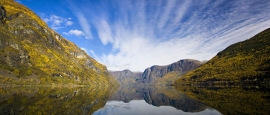


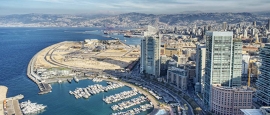
Between the Cangshan Mountains and Erhai Lake, Dali is one of Yunnan's most appealing historic towns. Its old town retains traditional Bai architecture, courtyards and cobbled streets, while the nearby Three Pagodas are among the region's best-known landmarks. Cycling or walking beside Erhai Lake offers a quieter way to explore the surrounding villages and countryside.
Book and Go

Latest features
China things to see and do
Dali
Guangzhou
One of China's great trading cities, Guangzhou combines centuries of Cantonese heritage with a striking modern skyline. The Chen Clan Ancestral Hall is richly decorated with carvings and ceramics, while Shamian Island preserves tree-lined streets and European-style buildings from the city's trading past. Across the Pearl River, the 600m (1,969ft) Canton Tower provides sweeping views over the city.
Harbin
Harbin's long, bitterly cold winters are the setting for its celebrated International Ice and Snow Sculpture Festival. Each winter, enormous buildings, towers and figures carved from blocks of ice are illuminated after dark, creating a temporary frozen city. Away from the festival grounds, the city's Russian heritage is visible around Central Street and the distinctive St Sophia Cathedral.
Jiuzhaigou Valley
Turquoise lakes, waterfalls and forested mountains define Jiuzhaigou Valley in northern Sichuan Province. This UNESCO World Heritage Site lies on the edge of the Tibetan Plateau and is particularly striking in autumn, when colourful forests are reflected in its clear lakes. A network of boardwalks and shuttle buses connects the principal scenic areas while helping to protect the fragile landscape.
Kaiping Diaolou
Rising unexpectedly above farmland and villages in Guangdong Province, Kaiping's diaolou are fortified multi-storey towers built largely during the late 19th and early 20th centuries. Their architecture combines Chinese traditions with influences brought home by emigrants who had lived in Europe, North America and Southeast Asia. Several clusters form the UNESCO-listed Kaiping Diaolou and Villages, with Zili Village among the most accessible.
Nanjing
Few Chinese cities reveal as many layers of the country's history as Nanjing, which served as the national capital during several periods. The vast Ming Xiaoling Mausoleum lies beneath wooded Purple Mountain, while the surviving Ming city wall ranks among the world's longest ancient urban walls. The Nanjing Massacre Memorial Hall documents the city's darkest chapter during the Japanese occupation of 1937–38.
Suzhou
Classical gardens, canals and stone bridges have shaped Suzhou's reputation as one of China's most graceful historic cities. Several of its gardens are UNESCO-listed, including the Humble Administrator's Garden, where pavilions, ponds and carefully framed views exemplify traditional Chinese garden design. The city's old canal-side neighbourhoods, particularly around Pingjiang Road, are best explored on foot.
Yunnan, Lijiang and Tiger Leaping Gorge
Lijiang's UNESCO-listed old town is a maze of canals, stone lanes and timber houses set beneath the mountains of northwest Yunnan. The city is closely associated with the Naxi people, whose distinctive cultural traditions remain an important part of the region's identity. North of Lijiang, Tiger Leaping Gorge cuts dramatically between Jade Dragon Snow Mountain and Haba Snow Mountain and offers one of China's best-known multi-day hiking routes.
Beijing
China's capital is a vast city where imperial history meets modern development. Visitors can explore the Forbidden City, once home to Chinese emperors, and Tiananmen Square, one of the largest public squares in the world. The city also provides access to nearby sections of the Great Wall.
Chengdu
Chengdu is the capital of Sichuan Province and is famous for its relaxed pace of life and distinctive cuisine. It is also home to the Chengdu Research Base of Giant Panda Breeding, where visitors can see China's iconic animals. The city serves as a gateway to western China and nearby mountain regions.
Guilin and Yangshuo
This region in southern China is known for its dramatic karst landscapes, with limestone peaks rising from rivers and rice fields. A cruise along the Li River between Guilin and Yangshuo is one of the country's most scenic experiences. The area is popular for cycling, hiking and photography.
Hangzhou and West Lake
Hangzhou is known for its natural beauty and historic sites, centred around West Lake, a UNESCO World Heritage Site. The lake is surrounded by gardens, temples and pagodas, creating a landscape that has inspired Chinese art and literature for centuries.
Hong Kong
Hong Kong is a global financial centre with a distinct identity shaped by its history and location. It offers a mix of modern skyscrapers, traditional markets and natural attractions such as Victoria Peak and surrounding islands. The city also serves as a gateway to southern China.
Huangshan (Yellow Mountains)
Huangshan (Yellow Mountains) Huangshan, in eastern China, is one of the country's most celebrated mountain landscapes and a UNESCO World Heritage Site. Known for its granite peaks, twisted pine trees and frequent sea of clouds, it has inspired Chinese art for centuries. Well-developed paths and cable cars make the area accessible while still offering dramatic scenery.
Kashgar
For centuries, Kashgar was an important trading centre on routes linking China with Central Asia. Its old city is characterised by narrow lanes, courtyards and traditional Uyghur architecture, while the Id Kah Mosque stands at the heart of the historic centre. The city's markets remain a focal point for regional food, crafts and commerce.
Lhasa and the Potala Palace
Lhasa, in the Tibet Autonomous Region, is one of the most culturally significant cities in China. The Potala Palace, a UNESCO World Heritage Site, dominates the skyline and was once the residence of the Dalai Lama. The city is also home to monasteries and religious sites reflecting Tibetan Buddhism.
Macau
Macau combines Portuguese colonial heritage with modern development and is known for its historic centre, a UNESCO World Heritage Site. The city features a mix of European-style architecture, temples and entertainment complexes, reflecting its unique cultural background.
Pingyao
Pingyao is a remarkably well-preserved ancient town in Shanxi Province and a UNESCO World Heritage Site. Its city walls, traditional courtyard houses and narrow streets offer a glimpse into life during the Ming and Qing dynasties. Unlike larger cities, it retains a more intimate and historic atmosphere, making it one of the best places to experience traditional urban China.
Shanghai
Shanghai is China's largest city and a global financial centre, known for its modern skyline and historic waterfront. The Bund offers views of colonial-era buildings along the Huangpu River, while Pudong is home to some of the world's tallest skyscrapers. The city also features museums, shopping districts and a vibrant food scene.
The Great Wall of China
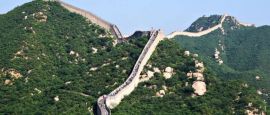
Stretching thousands of kilometres across northern China, the Great Wall is one of the country's most iconic landmarks and a UNESCO World Heritage Site. Sections near Beijing, such as Badaling and Mutianyu, are among the most visited, while more remote areas offer a quieter experience.
The Silk Road (northwest China)
The historic Silk Road passes through northwestern China, linking a series of ancient trading cities and desert landscapes. Sites such as Dunhuang's Mogao Caves feature remarkable Buddhist art and murals, offering insight into centuries of cultural exchange.
Xi'an and the Terracotta Army
Xi'an was the starting point of the ancient Silk Road and is one of China's historic capitals. Its most famous attraction is the Terracotta Army, a vast collection of life-sized statues buried with China's first emperor. The city also features ancient walls, pagodas and traditional neighbourhoods.
Zhangjiajie National Forest Park
Located in Hunan Province, this park is famous for its towering sandstone pillars, which are said to have inspired the landscapes in the film "Avatar". Elevated walkways and glass bridges offer views across dramatic cliffs and valleys.
Do you have any Feedback about this page?
© 2026 Columbus Travel Media Ltd. All rights reserved. No part of this site may be reproduced without our written permission, click here for information on Columbus Content Solutions.



 You know where